FROM AREVALO WHICH THEY REACHED YESTERDAY
On G plus one (19 March), the division resumed its advance on Iloilo from Arevalo as the command post opened at Oton.
- U.S. Eight Army

at 0800, march 19th, the enemy, supported by several tanks, attacked molo south of iloilo. the 2nd company resisted this assault.
- Lt. Sadayoshi Ishikawa
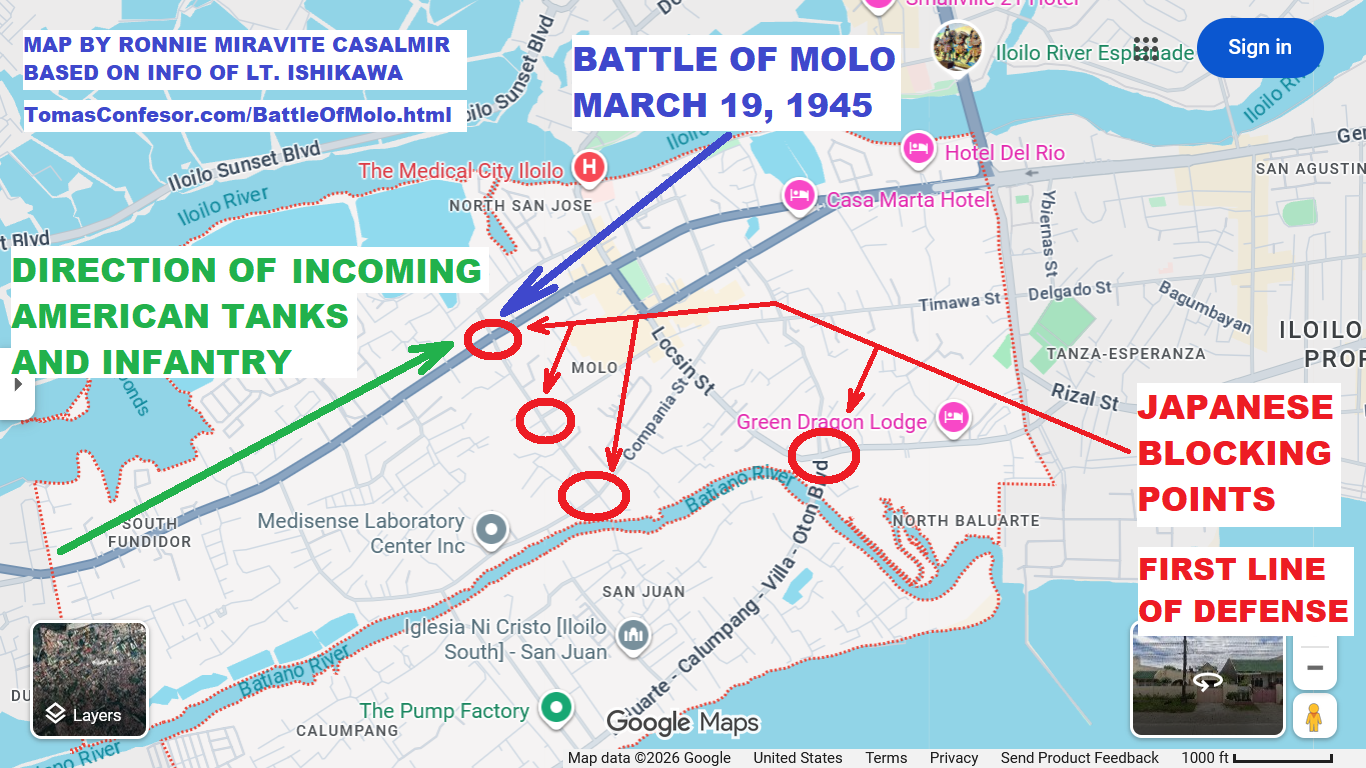
Battle of Molo, March 19, 1945
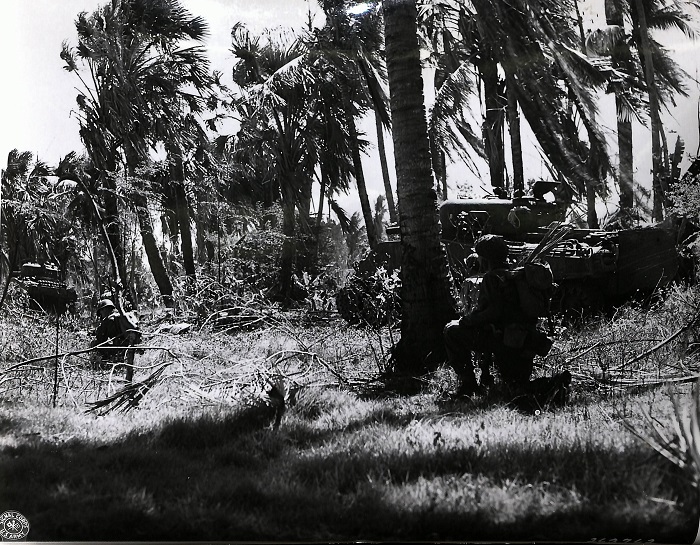
SC 263762
71. Tanks are moving up on Jap held positions on Panay, P.I., 3/19/1945.
at 0800, march 19th, the enemy, supported by several tanks, attacked molo south of iloilo. the 2nd company resisted this assault.
- Lt. Sadayoshi Ishikawa
BEFORE THE FIRST DEFENSE LINE
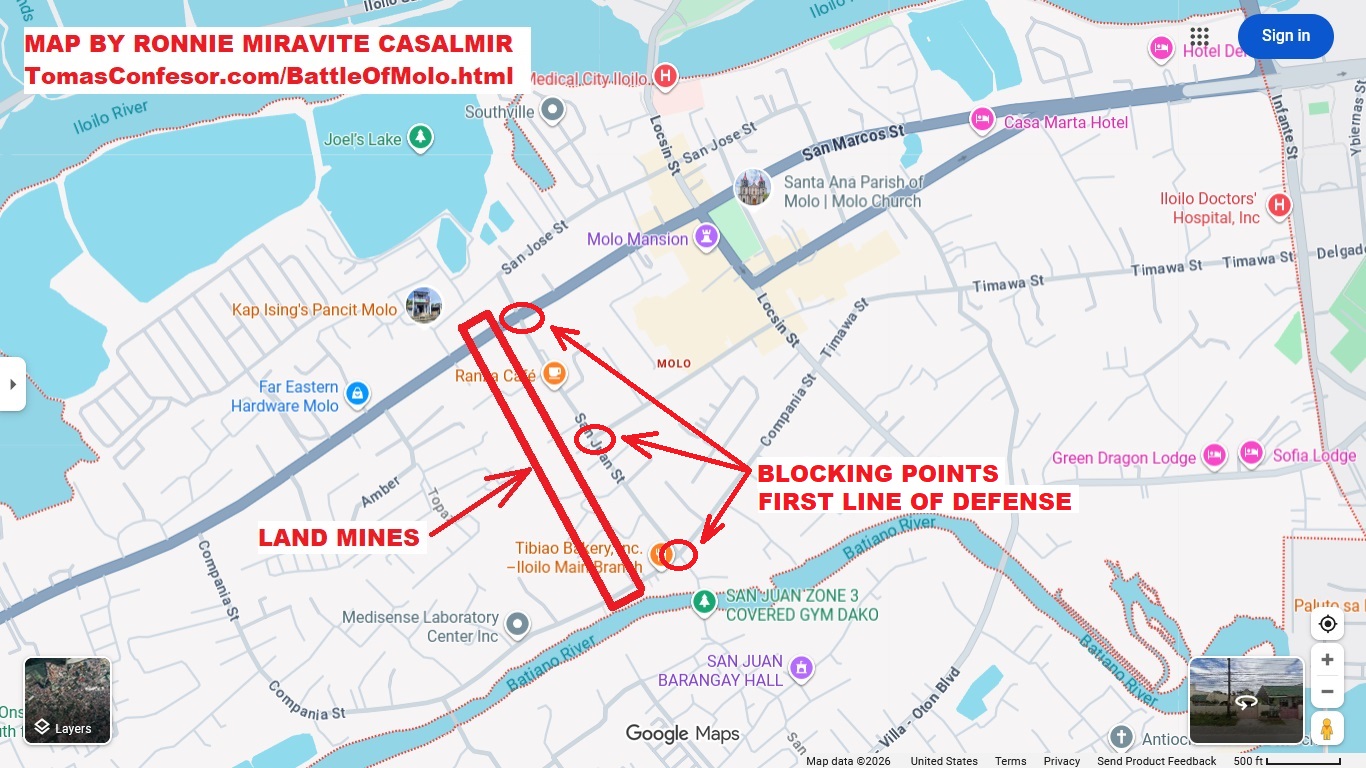
Battle of Molo, March 19, 1945
PENETRATE PART OF THE JAPANESE FIRST LINE OF DEFENSE
but by 1000 a part of the first line defense had been penetrated.
- Lt. Sadayoshi Ishikawa
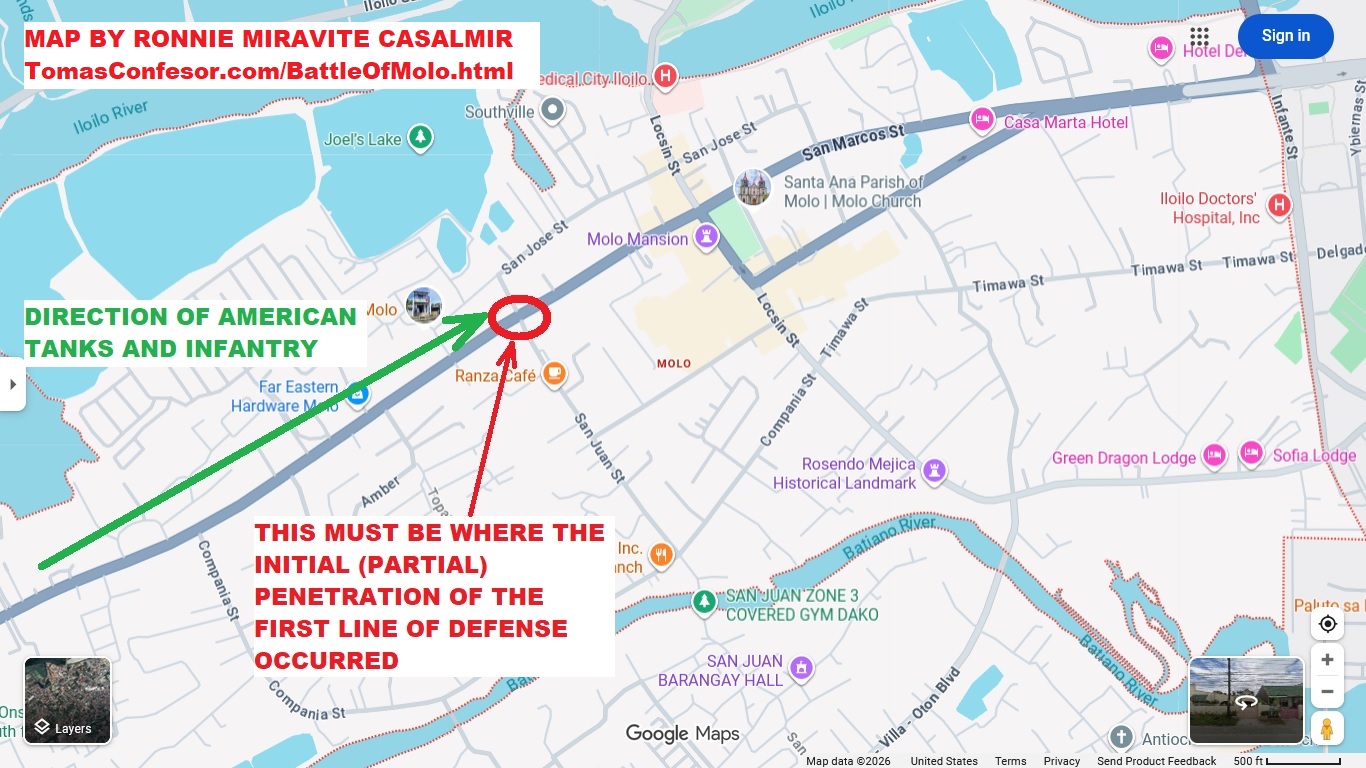
Battle of Molo, March 19, 1945
ALONG THEIR SECOND DEFENSE LINE
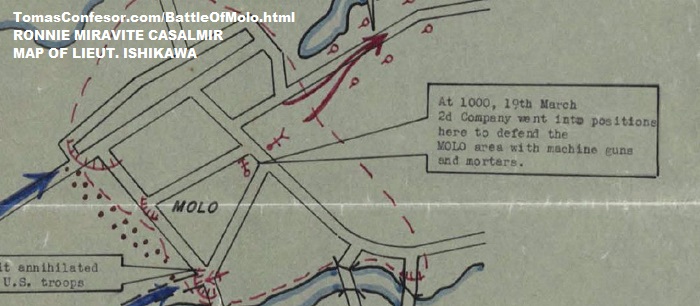
Japanese Second Line of Defense
TO ATTACK THE 3RD JAPANESE BLOCKING POINT
Hostile tanks now advanced along the road running along the coast-line and the Aton Road, and overrun the company to expose the inner defenses, thus making the position vulnerable to further assaults.
- Lt. Sadayoshi Ishikawa
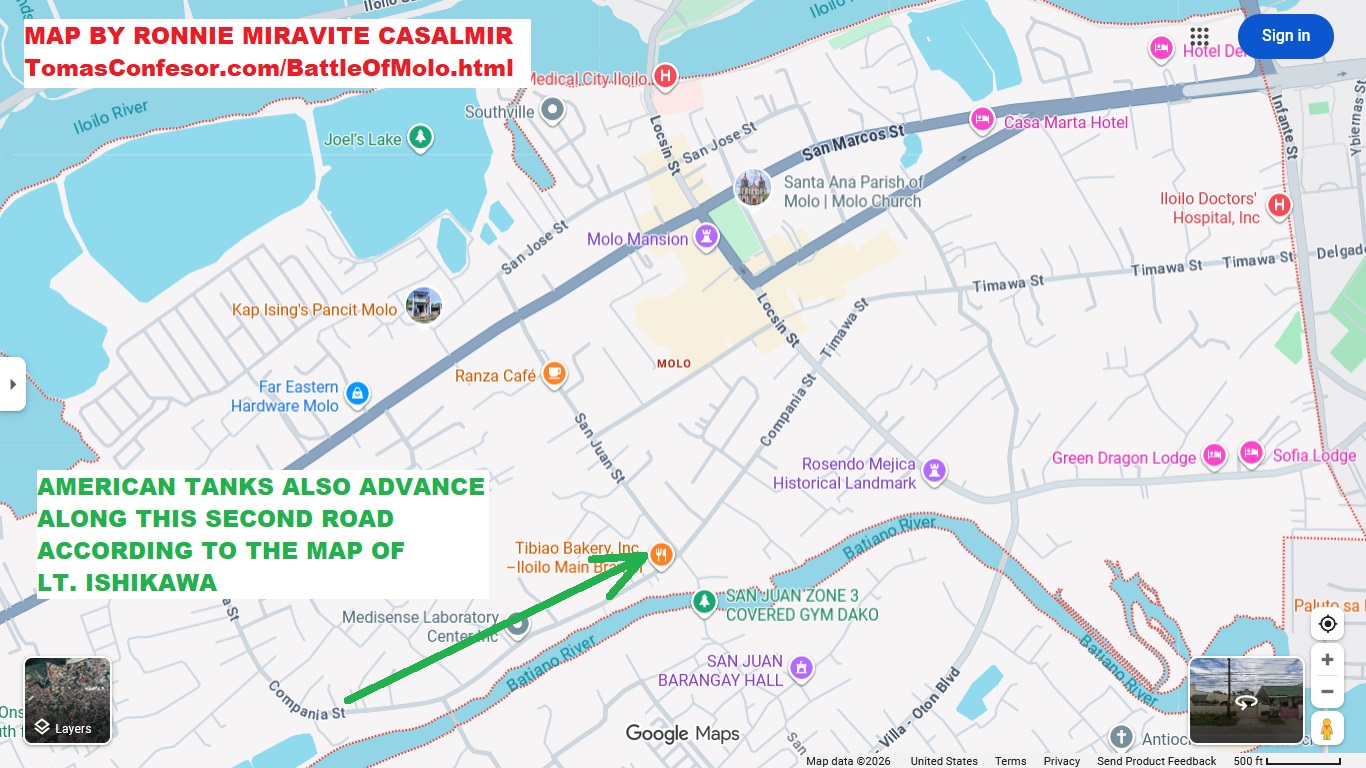
Battle of Molo, March 19, 1945
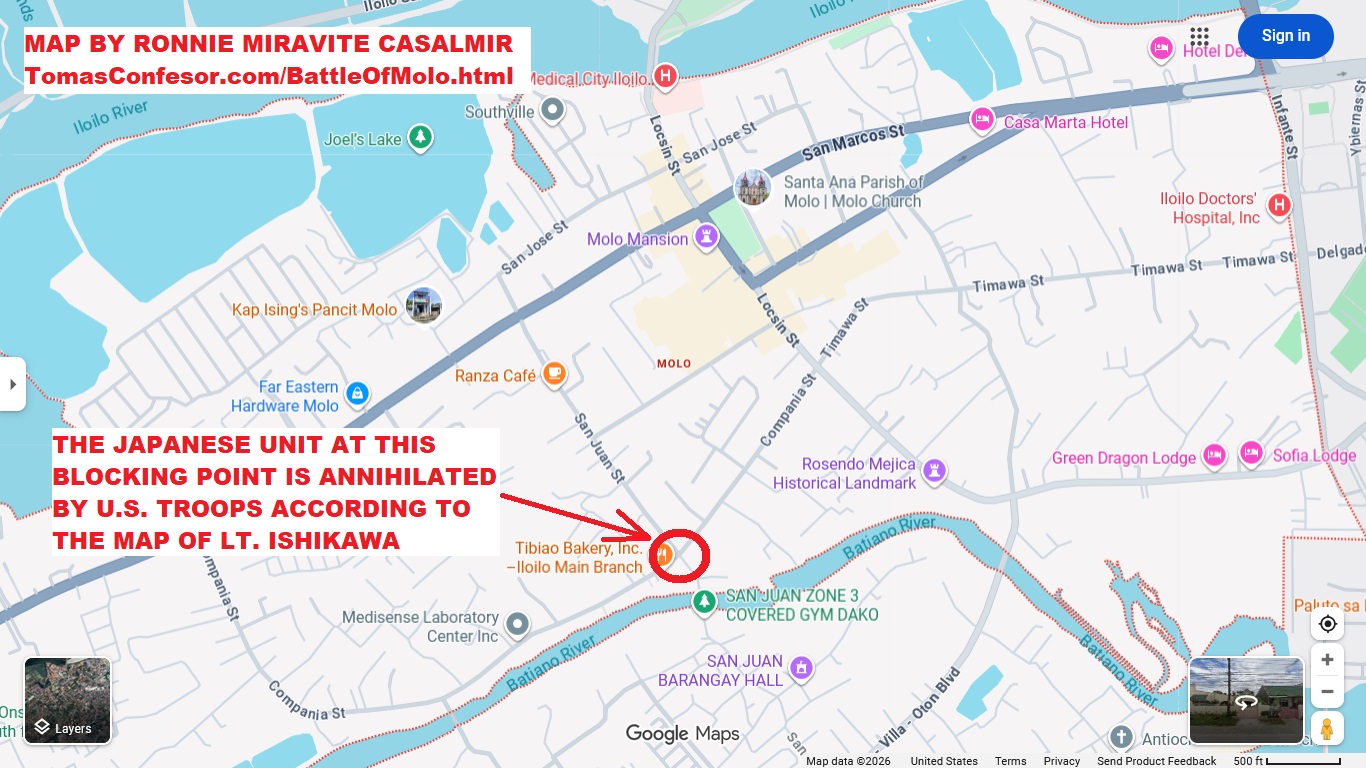
Battle of Molo, March 19, 1945
Hostile tanks now advanced along the road running along the coast-line and the Aton Road, and overrun the company to expose the inner defenses, thus making the position vulnerable to further assaults.
- Lt. Sadayoshi Ishikawa
The eastward drive of the two battalions (1st Battalion and 2nd Battalion) of the (185th) regiment was halted when the 1st Battalion engaged approximately two enemy platoons barricaded in the Molo cathedral, receiving intense machine gun and rifle fire from this force. The Japanese position, which commanded all approaches, afforded excellent observation of our movement. Their guns were fired through slits in the cement walls surrounding the church and in the towers of the building. our tanks were summoned to the aid of the pinned-down foot troops and, using direct fire, destroyed many of the hostile positions. the japanese retreated to the rear of the catheral and then dispersed into adjacent buildings.
- U.S. Eight Army
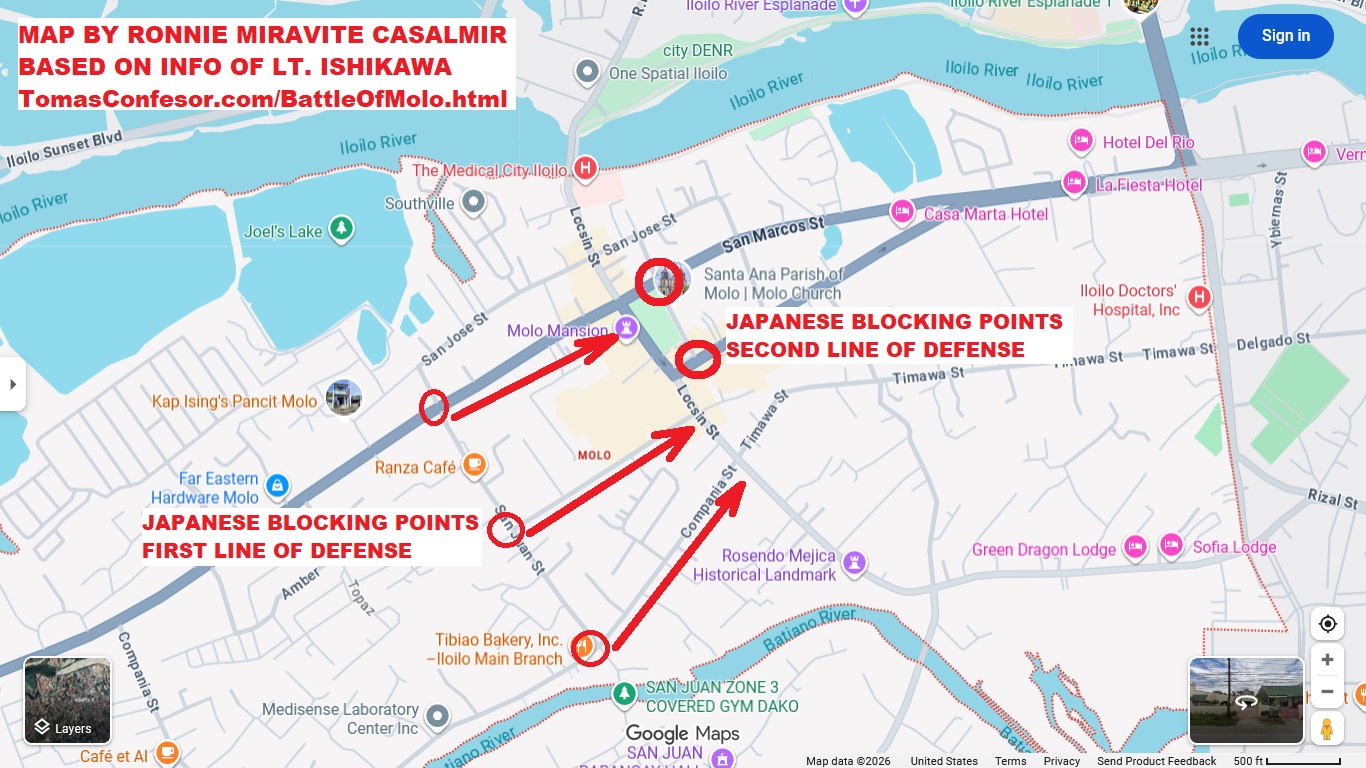
Japanese Second Line of Defense
EXPOSES THE JAPANESE SECOND LINE OF DEFENSE
MAKING THEM VULNERABLE TO FURTHER AMERICAN ASSAULTS
Hostile tanks now advanced along the road running along the coast-line and the Aton Road, and overrun the company to expose the inner defenses, thus making the position vulnerable to further assaults.
- Lt. Sadayoshi Ishikawa
HAPPENS TO BE THE JAPANESE STRONG POINT
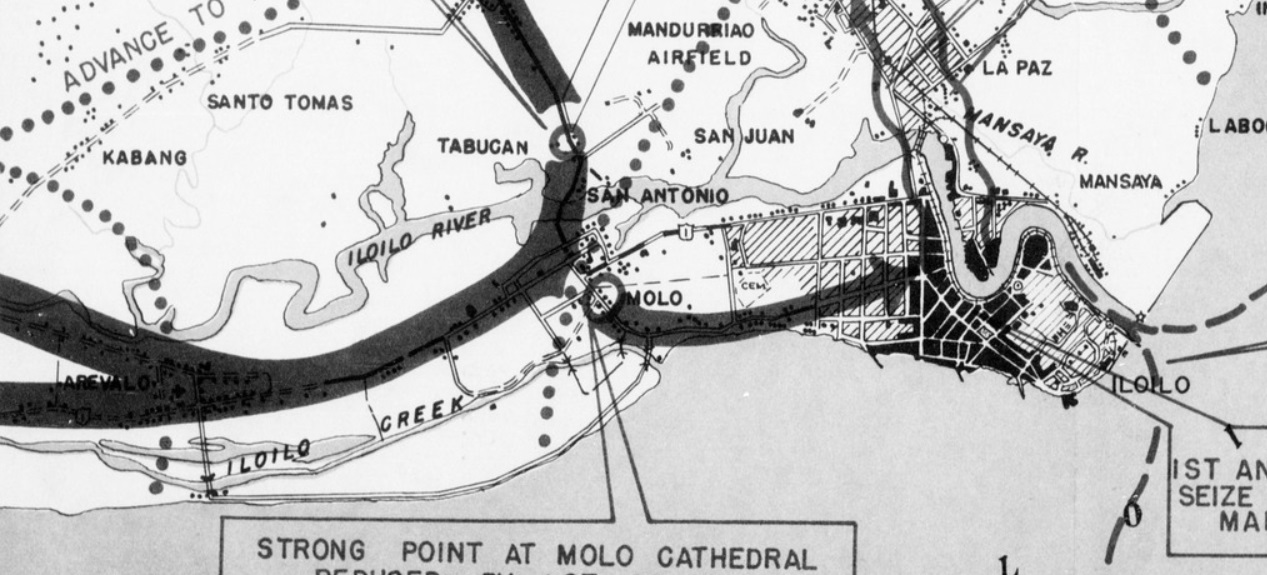
Map provided by Wanda Ole
The eastward drive of the two battalions (1st Battalion and 2nd Battalion) of the (185th) regiment was halted when the 1st Battalion engaged approximately two enemy platoons barricaded in the Molo cathedral, receiving intense machine gun and rifle fire from this force. The Japanese position, which commanded all approaches, afforded excellent observation of our movement. Their guns were fired through slits in the cement walls surrounding the church and in the towers of the building. our tanks were summoned to the aid of the pinned-down foot troops and, using direct fire, destroyed many of the hostile positions. the japanese retreated to the rear of the catheral and then dispersed into adjacent buildings.
- U.S. Eight Army
THEY COMMAND ALL APPROACHES (BLOCKING POINTS)
The eastward drive of the two battalions (1st Battalion and 2nd Battalion) of the (185th) regiment was halted when the 1st Battalion engaged approximately two enemy platoons barricaded in the Molo cathedral, receiving intense machine gun and rifle fire from this force. The Japanese position, which commanded all approaches, afforded excellent observation of our movement. Their guns were fired through slits in the cement walls surrounding the church and in the towers of the building. our tanks were summoned to the aid of the pinned-down foot troops and, using direct fire, destroyed many of the hostile positions. the japanese retreated to the rear of the catheral and then dispersed into adjacent buildings.
- U.S. Eight Army
The eastward drive of the two battalions (1st Battalion and 2nd Battalion) of the (185th) regiment was halted when the 1st Battalion engaged approximately two enemy platoons barricaded in the Molo cathedral, receiving intense machine gun and rifle fire from this force. The Japanese position, which commanded all approaches, afforded excellent observation of our movement. Their guns were fired through slits in the cement walls surrounding the church and in the towers of the building. our tanks were summoned to the aid of the pinned-down foot troops and, using direct fire, destroyed many of the hostile positions. the japanese retreated to the rear of the catheral and then dispersed into adjacent buildings.
- U.S. Eight Army
The eastward drive of the two battalions (1st Battalion and 2nd Battalion) of the (185th) regiment was halted when the 1st Battalion engaged approximately two enemy platoons barricaded in the Molo cathedral, receiving intense machine gun and rifle fire from this force. The Japanese position, which commanded all approaches, afforded excellent observation of our movement. Their guns were fired through slits in the cement walls surrounding the church and in the towers of the building. our tanks were summoned to the aid of the pinned-down foot troops and, using direct fire, destroyed many of the hostile positions. the japanese retreated to the rear of the catheral and then dispersed into adjacent buildings.
- U.S. Eight Army
RETRIEVES AND TENDS TO THE WOUNDED
EXPOSING HIMSELF TO ENEMY FIRE
G.O. No. 54, Hq 40th Inf Div, APO 40, 11 April 45.
I. AWARD OF THE SILVER STAR (POSTHUMOUS):
By direction of the President, under the provisions of the Act of Congress approved 9 July 1918 (Bulletin 43, WD, 1918), a Silver Star is awarded by the Commanding General, 40th Infantry Division, to the following named enlisted men:
Corporal KENNETH VAN ANTWERP, 39604231, Medical Department, United States Army. For gallantry in action near Molo, Panay, P.I., on 19 March 1945. During an engagement with the enemy, word reached the aid station that a litter squad was pinned down by enemy fire. Corporal Van Antwerp volunteered to go forward and while on this mission was informed that a fellow soldier had been wounded. He succeeded in finding the wounded soldier who was with the most forward element of the assault platoon in an area under heavy enemy fire. Corporal Van Antwerp removed the wounded man to a position of comparative safety behind a low stone wall, and administered first aid. He repeatedly exposed himself to the enemy fire that was coming over the wall. Immediately after dressing the wounds, Corporal Van Antwerp was killed by machine gun fire. Next of kin: Mr. Denzil Cochran (mother), Lima, Montana.
120
BY COMMAND OF MAJOR GENERAL BRUSH:
GEORGE W. LATIMER,
Colonel, GSC,
Chief of Staff.
IS KILLED IN ACTION BY MACHINE GUN FIRE
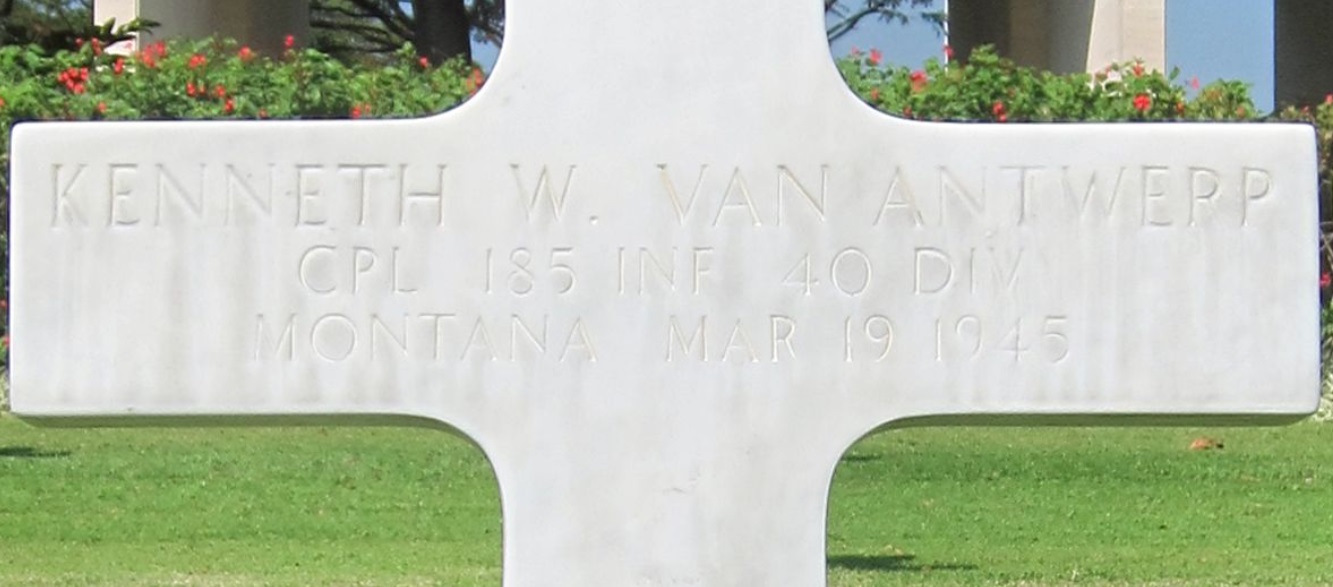
https://www.findagrave.com/memorial/56791612/kenneth-winston-van_antwerp
G.O. No. 54, Hq 40th Inf Div, APO 40, 11 April 45.
I. AWARD OF THE SILVER STAR (POSTHUMOUS):
By direction of the President, under the provisions of the Act of Congress approved 9 July 1918 (Bulletin 43, WD, 1918), a Silver Star is awarded by the Commanding General, 40th Infantry Division, to the following named enlisted men:
Corporal KENNETH VAN ANTWERP, 39604231, Medical Department, United States Army. For gallantry in action near Molo, Panay, P.I., on 19 March 1945. During an engagement with the enemy, word reached the aid station that a litter squad was pinned down by enemy fire. Corporal Van Antwerp volunteered to go forward and while on this mission was informed that a fellow soldier had been wounded. He succeeded in finding the wounded soldier who was with the most forward element of the assault platoon in an area under heavy enemy fire. Corporal Van Antwerp removed the wounded man to a position of comparative safety behind a low stone wall, and administered first aid. He repeatedly exposed himself to the enemy fire that was coming over the wall. Immediately after dressing the wounds, Corporal Van Antwerp was killed by machine gun fire. Next of kin: Mr. Denzil Cochran (mother), Lima, Montana.
120
BY COMMAND OF MAJOR GENERAL BRUSH:
GEORGE W. LATIMER,
Colonel, GSC,
Chief of Staff.
EARNS SILVER STAR (POSTHUMOUS)
KILLED IN ACTION BY MACHINE GUN FIRE AFTER GIVING MEDICAL ATTENTION TO THE WOUNDED
G.O. No. 54, Hq 40th Inf Div, APO 40, 11 April 45.
I. AWARD OF THE SILVER STAR (POSTHUMOUS):
By direction of the President, under the provisions of the Act of Congress approved 9 July 1918 (Bulletin 43, WD, 1918), a Silver Star is awarded by the Commanding General, 40th Infantry Division, to the following named enlisted men:
Corporal KENNETH VAN ANTWERP, 39604231, Medical Department, United States Army. For gallantry in action near Molo, Panay, P.I., on 19 March 1945. During an engagement with the enemy, word reached the aid station that a litter squad was pinned down by enemy fire. Corporal Van Antwerp volunteered to go forward and while on this mission was informed that a fellow soldier had been wounded. He succeeded in finding the wounded soldier who was with the most forward element of the assault platoon in an area under heavy enemy fire. Corporal Van Antwerp removed the wounded man to a position of comparative safety behind a low stone wall, and administered first aid. He repeatedly exposed himself to the enemy fire that was coming over the wall. Immediately after dressing the wounds, Corporal Van Antwerp was killed by machine gun fire. Next of kin: Mr. Denzil Cochran (mother), Lima, Montana.
120
BY COMMAND OF MAJOR GENERAL BRUSH:
GEORGE W. LATIMER,
Colonel, GSC,
Chief of Staff.
IS SUBJECTED TO MACHINE GUN FIRE
G.O. No. 54, Hq 40th Inf Div, APO 40, 11 April 45.
II. AWARDS OF THE SILVER STAR:
By direction of the President, under the provisions of the Act of Congress approved 9 July 1918 (Bulletin 43, WD, 1918), a Silver Star is awarded by the Commanding General, 40th Infantry Division, to the following named enlisted men and officer:
Technician Fifth Grade RAYMOND G. MEYERS, 15315901, Medical Department, United States Army. For gallantry in action near Molo, Panay, P.I., on 19 March 1945. The infantry company to which Technician Fifth Grade Meyers was attached, as an aid man, suffered casualties when machine gun fire from enemy emplacements was encountered. Leaving his position of relative safety, Technician Fifth Grade Meyers advanced under fire to render medical aid. While tending a wounded soldier, Technician Fifth Grade Meyers was wounded; despite his own wound he continued his work, and directed evacuation of the wounded man. Technician Fifth Grade Meyers dressed his own wound as best he could and crawled back to an unexposed location. Upon reaching this area, he found another wounded soldier to whom he rendered first aid before permitting the litter team to remove himself and the wounded one to the aid station. Home address: Mrs. Ida Meyers (mother), 1107 9th Street S.W., Canton, Ohio.
121
https://www.findagrave.com/memorial/36505653/raymond-g-meyers
BY COMMAND OF MAJOR GENERAL BRUSH:
GEORGE W. LATIMER,
Colonel, GSC,
Chief of Staff.
TENDS TO THE WOUNDED AND IS WOUNDED HIMSELF
G.O. No. 54, Hq 40th Inf Div, APO 40, 11 April 45.
II. AWARDS OF THE SILVER STAR:
By direction of the President, under the provisions of the Act of Congress approved 9 July 1918 (Bulletin 43, WD, 1918), a Silver Star is awarded by the Commanding General, 40th Infantry Division, to the following named enlisted men and officer:
Technician Fifth Grade RAYMOND G. MEYERS, 15315901, Medical Department, United States Army. For gallantry in action near Molo, Panay, P.I., on 19 March 1945. The infantry company to which Technician Fifth Grade Meyers was attached, as an aid man, suffered casualties when machine gun fire from enemy emplacements was encountered. Leaving his position of relative safety, Technician Fifth Grade Meyers advanced under fire to render medical aid. While tending a wounded soldier, Technician Fifth Grade Meyers was wounded; despite his own wound he continued his work, and directed evacuation of the wounded man. Technician Fifth Grade Meyers dressed his own wound as best he could and crawled back to an unexposed location. Upon reaching this area, he found another wounded soldier to whom he rendered first aid before permitting the litter team to remove himself and the wounded one to the aid station. Home address: Mrs. Ida Meyers (mother), 1107 9th Street S.W., Canton, Ohio.
121
https://www.findagrave.com/memorial/36505653/raymond-g-meyers
BY COMMAND OF MAJOR GENERAL BRUSH:
GEORGE W. LATIMER,
Colonel, GSC,
Chief of Staff.
EARNS SILVER STAR
FOR TENDING TO THE WOUNDED DESPITE HIS OWN WOUNDS
G.O. No. 54, Hq 40th Inf Div, APO 40, 11 April 45.
II. AWARDS OF THE SILVER STAR:
By direction of the President, under the provisions of the Act of Congress approved 9 July 1918 (Bulletin 43, WD, 1918), a Silver Star is awarded by the Commanding General, 40th Infantry Division, to the following named enlisted men and officer:
Technician Fifth Grade RAYMOND G. MEYERS, 15315901, Medical Department, United States Army. For gallantry in action near Molo, Panay, P.I., on 19 March 1945. The infantry company to which Technician Fifth Grade Meyers was attached, as an aid man, suffered casualties when machine gun fire from enemy emplacements was encountered. Leaving his position of relative safety, Technician Fifth Grade Meyers advanced under fire to render medical aid. While tending a wounded soldier, Technician Fifth Grade Meyers was wounded; despite his own wound he continued his work, and directed evacuation of the wounded man. Technician Fifth Grade Meyers dressed his own wound as best he could and crawled back to an unexposed location. Upon reaching this area, he found another wounded soldier to whom he rendered first aid before permitting the litter team to remove himself and the wounded one to the aid station. Home address: Mrs. Ida Meyers (mother), 1107 9th Street S.W., Canton, Ohio.
121
https://www.findagrave.com/memorial/36505653/raymond-g-meyers
BY COMMAND OF MAJOR GENERAL BRUSH:
GEORGE W. LATIMER,
Colonel, GSC,
Chief of Staff.
IS SUBJECTED TO MACHINE GUN FIRE
G.O. No. 54, Hq 40th Inf Div, APO 40, 11 April 45.
II. AWARDS OF THE SILVER STAR:
By direction of the President, under the provisions of the Act of Congress approved 9 July 1918 (Bulletin 43, WD, 1918), a Silver Star is awarded by the Commanding General, 40th Infantry Division, to the following named enlisted men and officer:
Private First Class JOSE VEGA, 6267921, Medical Department, United States Army. For gallantry in action near Molo, Panay, P.I., on 19 March 1945. During an attack on enemy forces, Private First Class Vega; an aid man, was attached to an infantry company. When the company was subjected to heavy ??? machine gun fire from emplaced weapons, two men were wounded while attempting to cross an exposed area. As he was crossing the open area to give them medical attention, Private First Class Vega was seriously wounded. Disregarding his own wounds, he proceeded to render first aid to one of the wounded men before crawling to the rear to have hiw own wounds treated. Home address: Mrs. Bertha V. Cerdona (sister), 1215 West Traira, San Antonio, Texas.
121
BY COMMAND OF MAJOR GENERAL BRUSH:
GEORGE W. LATIMER,
Colonel, GSC,
Chief of Staff.
TENDS TO THE WOUNDED AND IS WOUNDED HIMSELF
G.O. No. 54, Hq 40th Inf Div, APO 40, 11 April 45.
II. AWARDS OF THE SILVER STAR:
By direction of the President, under the provisions of the Act of Congress approved 9 July 1918 (Bulletin 43, WD, 1918), a Silver Star is awarded by the Commanding General, 40th Infantry Division, to the following named enlisted men and officer:
Private First Class JOSE VEGA, 6267921, Medical Department, United States Army. For gallantry in action near Molo, Panay, P.I., on 19 March 1945. During an attack on enemy forces, Private First Class Vega; an aid man, was attached to an infantry company. When the company was subjected to heavy ??? machine gun fire from emplaced weapons, two men were wounded while attempting to cross an exposed area. As he was crossing the open area to give them medical attention, Private First Class Vega was seriously wounded. Disregarding his own wounds, he proceeded to render first aid to one of the wounded men before crawling to the rear to have hiw own wounds treated. Home address: Mrs. Bertha V. Cerdona (sister), 1215 West Traira, San Antonio, Texas.
121
BY COMMAND OF MAJOR GENERAL BRUSH:
GEORGE W. LATIMER,
Colonel, GSC,
Chief of Staff.
EARNS SILVER STAR AWARD
FOR TENDING TO THE WOUNDED DESPITE HIS OWN WOUNDS
G.O. No. 54, Hq 40th Inf Div, APO 40, 11 April 45.
II. AWARDS OF THE SILVER STAR:
By direction of the President, under the provisions of the Act of Congress approved 9 July 1918 (Bulletin 43, WD, 1918), a Silver Star is awarded by the Commanding General, 40th Infantry Division, to the following named enlisted men and officer:
Private First Class JOSE VEGA, 6267921, Medical Department, United States Army. For gallantry in action near Molo, Panay, P.I., on 19 March 1945. During an attack on enemy forces, Private First Class Vega; an aid man, was attached to an infantry company. When the company was subjected to heavy ??? machine gun fire from emplaced weapons, two men were wounded while attempting to cross an exposed area. As he was crossing the open area to give them medical attention, Private First Class Vega was seriously wounded. Disregarding his own wounds, he proceeded to render first aid to one of the wounded men before crawling to the rear to have hiw own wounds treated. Home address: Mrs. Bertha V. Cerdona (sister), 1215 West Traira, San Antonio, Texas.
121
BY COMMAND OF MAJOR GENERAL BRUSH:
GEORGE W. LATIMER,
Colonel, GSC,
Chief of Staff.
SUFFERS A CASUALTY DURING ITS ATTACK
G.O. No. 60, Hq 40th Inf Div, APO 40, 19 April 1945
AWARDS OF THE BRONZE STAR MEDAL:
By direction of the President, under the provisions of Executive Order No. 9419, 4 February 1944 (Sec II, Bulletin 3, WD, 1944) a Bronze Star Medal is awarded by the Commanding General, 40th Infantry Division, to the following named officer and enlisted man:
Private First Class JOHN G. OJA, 37273996, Medical Department, United States Army. For heroic achievement in connection with military operations against the enemy near Molo, Panay, P.I., on 19 March 1945. During the attack by the company to which he was attached as aid man on an enemy holding force, it was reported that a member of one of the assault platoons had been wounded. Private First Class Oja led his litter squad to a forward and exposed position beyond the front line advancing without the aid of rifle protection. While proceeding forward, they were subjected to enemy machine gun fire, and Private First Class Oja was severely wounded as they took cover. He and his litter squad was hampered by enemy fire for approximately two hours. During this time Private First Class Oja directed evacuation; slowly crawling and dragging the litter while under fire. He finally became exhausted and was unable to continue, but he directed his litter squad to safety while he remained behind. His condition was such that another litter squad was dispatched to evacuate him. Home address: Mr. John Oja, Sr. (father), Rt 1, Box 39, Tamarock, Minnesota.
91
BY COMMAND OF MAJOR GENERAL BRUSH:
GEORGE W. LATIMER,
Colonel, GSC,
Chief of Staff.
HIS LITTER SQUAD IS SUBJECTED TO MACHINE GUN FIRE WHILE EVACUATING THE WOUNDED
AND HE HIMSELF IS WOUNDED
G.O. No. 60, Hq 40th Inf Div, APO 40, 19 April 1945
AWARDS OF THE BRONZE STAR MEDAL:
By direction of the President, under the provisions of Executive Order No. 9419, 4 February 1944 (Sec II, Bulletin 3, WD, 1944) a Bronze Star Medal is awarded by the Commanding General, 40th Infantry Division, to the following named officer and enlisted man:
Private First Class JOHN G. OJA, 37273996, Medical Department, United States Army. For heroic achievement in connection with military operations against the enemy near Molo, Panay, P.I., on 19 March 1945. During the attack by the company to which he was attached as aid man on an enemy holding force, it was reported that a member of one of the assault platoons had been wounded. Private First Class Oja led his litter squad to a forward and exposed position beyond the front line advancing without the aid of rifle protection. While proceeding forward, they were subjected to enemy machine gun fire, and Private First Class Oja was severely wounded as they took cover. He and his litter squad was hampered by enemy fire for approximately two hours. During this time Private First Class Oja directed evacuation; slowly crawling and dragging the litter while under fire. He finally became exhausted and was unable to continue, but he directed his litter squad to safety while he remained behind. His condition was such that another litter squad was dispatched to evacuate him. Home address: Mr. John Oja, Sr. (father), Rt 1, Box 39, Tamarock, Minnesota.
91
BY COMMAND OF MAJOR GENERAL BRUSH:
GEORGE W. LATIMER,
Colonel, GSC,
Chief of Staff.
EARNS BRONZE STAR MEDAL
FOR EVACUATING THE WOUNDED DESPITE HIS OWN WOUNDS
G.O. No. 60, Hq 40th Inf Div, APO 40, 19 April 1945
AWARDS OF THE BRONZE STAR MEDAL:
By direction of the President, under the provisions of Executive Order No. 9419, 4 February 1944 (Sec II, Bulletin 3, WD, 1944) a Bronze Star Medal is awarded by the Commanding General, 40th Infantry Division, to the following named officer and enlisted man:
Private First Class JOHN G. OJA, 37273996, Medical Department, United States Army. For heroic achievement in connection with military operations against the enemy near Molo, Panay, P.I., on 19 March 1945. During the attack by the company to which he was attached as aid man on an enemy holding force, it was reported that a member of one of the assault platoons had been wounded. Private First Class Oja led his litter squad to a forward and exposed position beyond the front line advancing without the aid of rifle protection. While proceeding forward, they were subjected to enemy machine gun fire, and Private First Class Oja was severely wounded as they took cover. He and his litter squad was hampered by enemy fire for approximately two hours. During this time Private First Class Oja directed evacuation; slowly crawling and dragging the litter while under fire. He finally became exhausted and was unable to continue, but he directed his litter squad to safety while he remained behind. His condition was such that another litter squad was dispatched to evacuate him. Home address: Mr. John Oja, Sr. (father), Rt 1, Box 39, Tamarock, Minnesota.
91
BY COMMAND OF MAJOR GENERAL BRUSH:
GEORGE W. LATIMER,
Colonel, GSC,
Chief of Staff.
William Lee Philpott was born in McMinn County, Tennessee, 4th child of 10, born to William and Ethel Ona (Daugherty) Philpott. He was the grandson of William Lafayette and Caroline Catharine (Gordon) Philpott and brother of; Emma Ruby, Callie Elvira, Bruce Lafayette, Ethel Florence, George Washington, Ella May, Donnie Rae, Myrtle Sue, and Sarah Elizabeth Philpott.
William Lee enlisted in the U.S. Army at camp Oglethorpe, Georgia on 15 September 1943 and was killed in action on 19 March, 1945. He served in the 185th Inf 40th Div. Buried in Ft. McKinley U.S. Military Cemetery, Plot G Row 9 Grave 35, Manilla Phillipines.
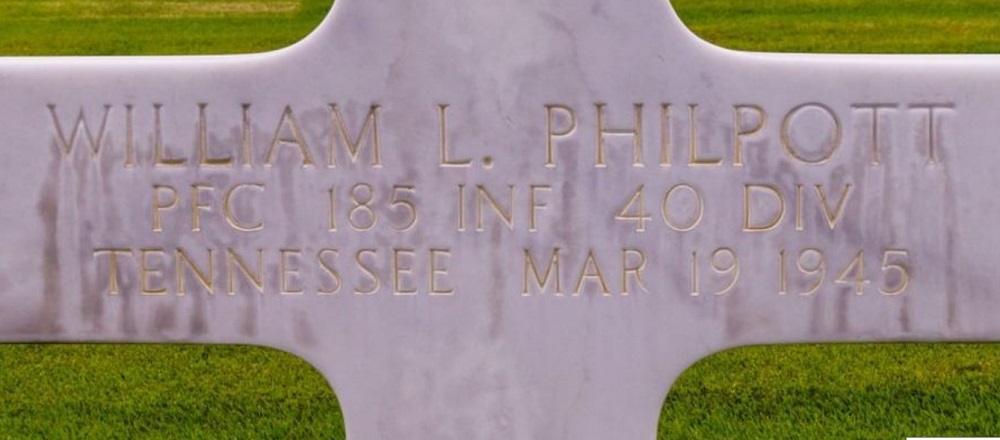
https://www.findagrave.com/memorial/24967511/william-lee-philpott
Death 19 Mar 1945 (aged 24–25), Philippines
He was the son of Samuel Lafayette "Fait" and Nealy May (Dooley) Rucker. He was killed in action against the Japanese in the Philippines while servicing as a Private First Class in the 185th Infantry, 40th Division, U.S. Army. He was awarded the Silver Star and Purple Heart posthumously.
https://www.findagrave.com/memorial/56773917/ellis-rucker
Death 19 Mar 1945 (aged 26)
Inscription: IDAHO, PFC, 185 INF 40 DIV, WORLD WAR II
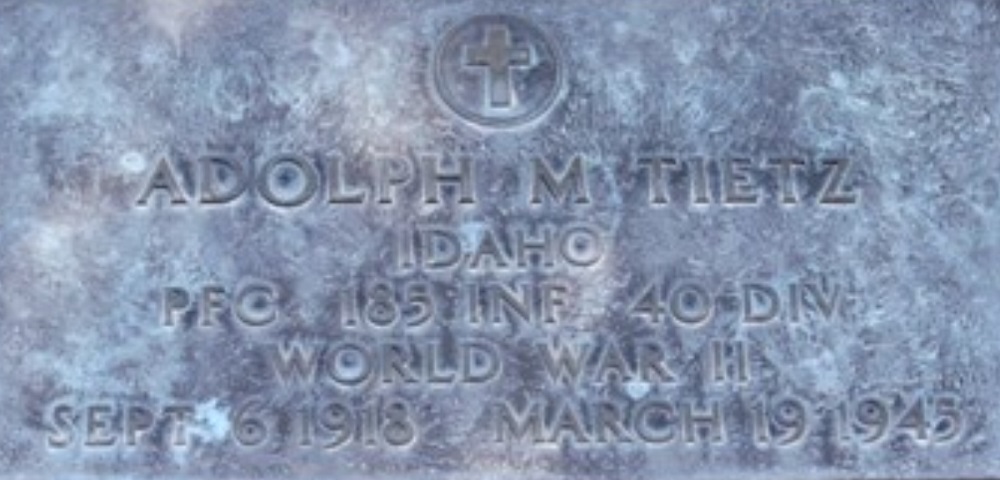
https://www.findagrave.com/memorial/24891396/adolph_m-tietz
Death 19 Mar 1945 (aged 27)
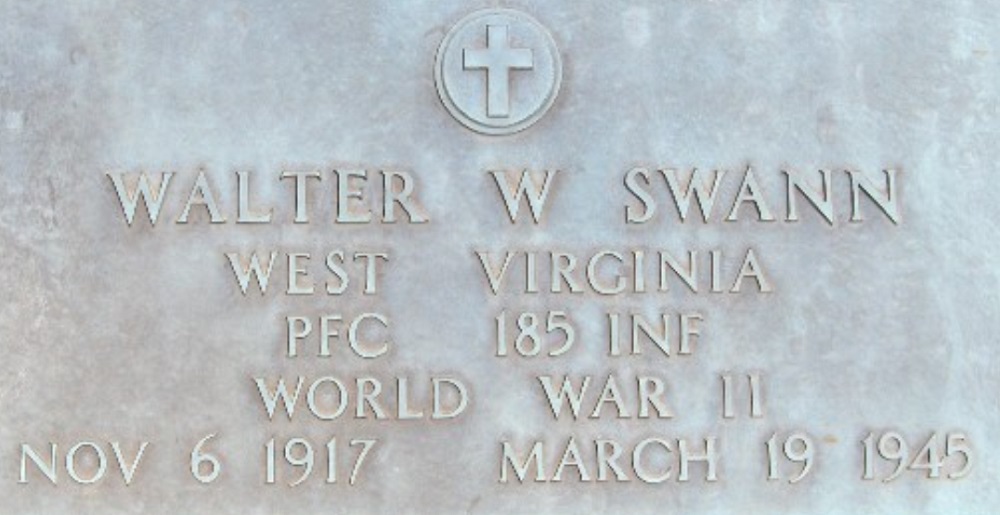
https://www.findagrave.com/memorial/27671636/walter_wilson-swann
The eastward drive of the two battalions (1st Battalion and 2nd Battalion) of the (185th) regiment was halted when the 1st Battalion engaged approximately two enemy platoons barricaded in the Molo cathedral, receiving intense machine gun and rifle fire from this force. The Japanese position, which commanded all approaches, afforded excellent observation of our movement. Their guns were fired through slits in the cement walls surrounding the church and in the towers of the building. our tanks were summoned to the aid of the pinned-down foot troops and, using direct fire, destroyed many of the hostile positions. the japanese retreated to the rear of the catheral and then dispersed into adjacent buildings.
- U.S. Eight Army
VOLUNTEERS TO ACCOMPANY COMBAT TROOPS AND TAKE PHOTOS IN ACTION
In October 1945, Lt. Robert E. Field was awarded the Silver Star, posthumously.
Silver Star Is Given as Award for Lieut. Field
Posthumous Award is made to Parents of Army Combat Photographer Killed in Panay Invasion.
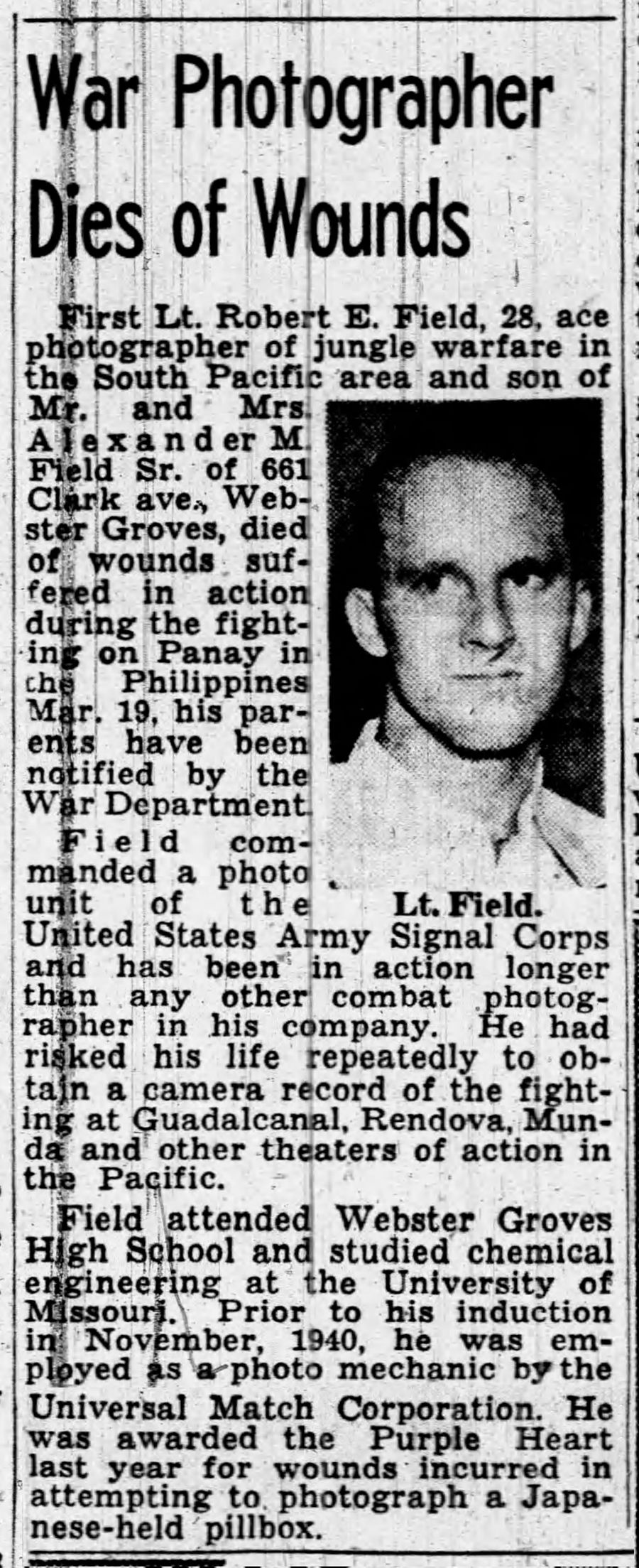
Posthumous award of the Silver Star medal to the late First Lieutenant Robert E. Field, army combat photographer, has been made to his parents, Mr. and Mrs. A. M. Field, of 661 Clark Avenue. Lt. Field lost his life on March 19 during the Panay Island Invasion, and the presidential citation reads as follows:
“For gallantry in action against an armed enemy of the United States near * * *, on March 19, 1945. Lieutenant Field, a Signal Corps photographic officer, had volunteered to act as film courier for a photo combat assignment unit and while waiting to perform his mission, further volunteered to accompany combat troops and take photographs in action. Determined to obtain detailed pictures, he moved ahead of the infantry to a stone wall behind which the enemy was barricaded. Weakened by artillery fire the wall fell outward. Nearby infantrymen saw the wall falling and escaped, but Lieutenant Field, preoccupied with his camera, did not observe the danger. He was buried beneath the rubble, and died shortly after being evacuated. Through his outstanding gallantry at the cost of his life Lieutenant Field was able to obtain detailed combat photographs which proved of great value in subsequent studies of enemy tactics.”
Source: The News-Times (Webster Groves, Missouri), Thursday, 25 October 1945, page 1.
https://www.findagrave.com/memorial/56779050/robert-edwin-field
DISPLAYS UNUSUAL SKILL IN EMPLOYMENT OF ATTACHED TANKS AND HEAVY WEAPONS
EARNS BRONZE STAR MEDAL
G.O. No. 69, Hq 40th Inf Div, APO 40, 29 April 1945
II. AWARDS OF THE BRONZE STAR MEDAL:
By direction of the President, under the provisions of Executive Order No. 9419, 4 February 1944 (Sec II, Bulletin 3, WD, 1944) a Bronze Star Medal is awarded by the Commanding General, 40th Infantry Division, to the following named enlisted men and officers:
Captain RICHARD A. GOCK, 0370916, Infantry, United States Army. For heroic achievement in connection with military operations against the enemy near Molo, Panay, P.I., from 19 March to 24 March 1945. During an engagement Captain Gock displayed unusual skill in the employment of attached tanks and heavy weapons. He made a personal reconnaissance which enabled his company to accomplish the destruction on a strong enemy delaying force which was impeding the advance of the entire battalion. His constant presence with the most forward elements of his command was a source of inspiration to his men, and contributed materially to the success of the battalion. Home address: Mrs. Richard A. Gock (wife), 326 Magnolia Ave., Piedmont, California.
76
BY COMMAND OF MAJOR GENERAL BRUSH:
GEORGE W. LATIMER,
Colonel, GSC,
Chief of Staff.
ONE OF THE PHOTOS TAKEN BY LT. ROBERT E. FIELD
BEFORE HE DIED FROM INJURIES RECEIVED IN ACTION
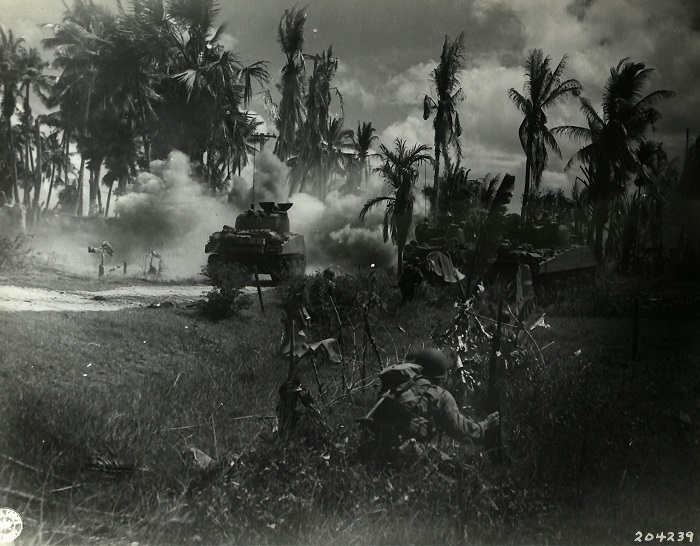
SC 204239
11. Troops of the 185th Infantry, 40th Division, take cover behind advancing tanks
while moving up on Jap positions on Panay Island, P.I.
Note: This photo was salvaged from the camera of Lt. Robert Field, Signal Corps photographer,
who was killed in action shortly after the picture was made. 3/19/1945.
(Lieut. Robert Field was killed at the Battle of Molo, March 19, 1945)
https://www.findagrave.com/memorial/56779050/robert-edwin-field
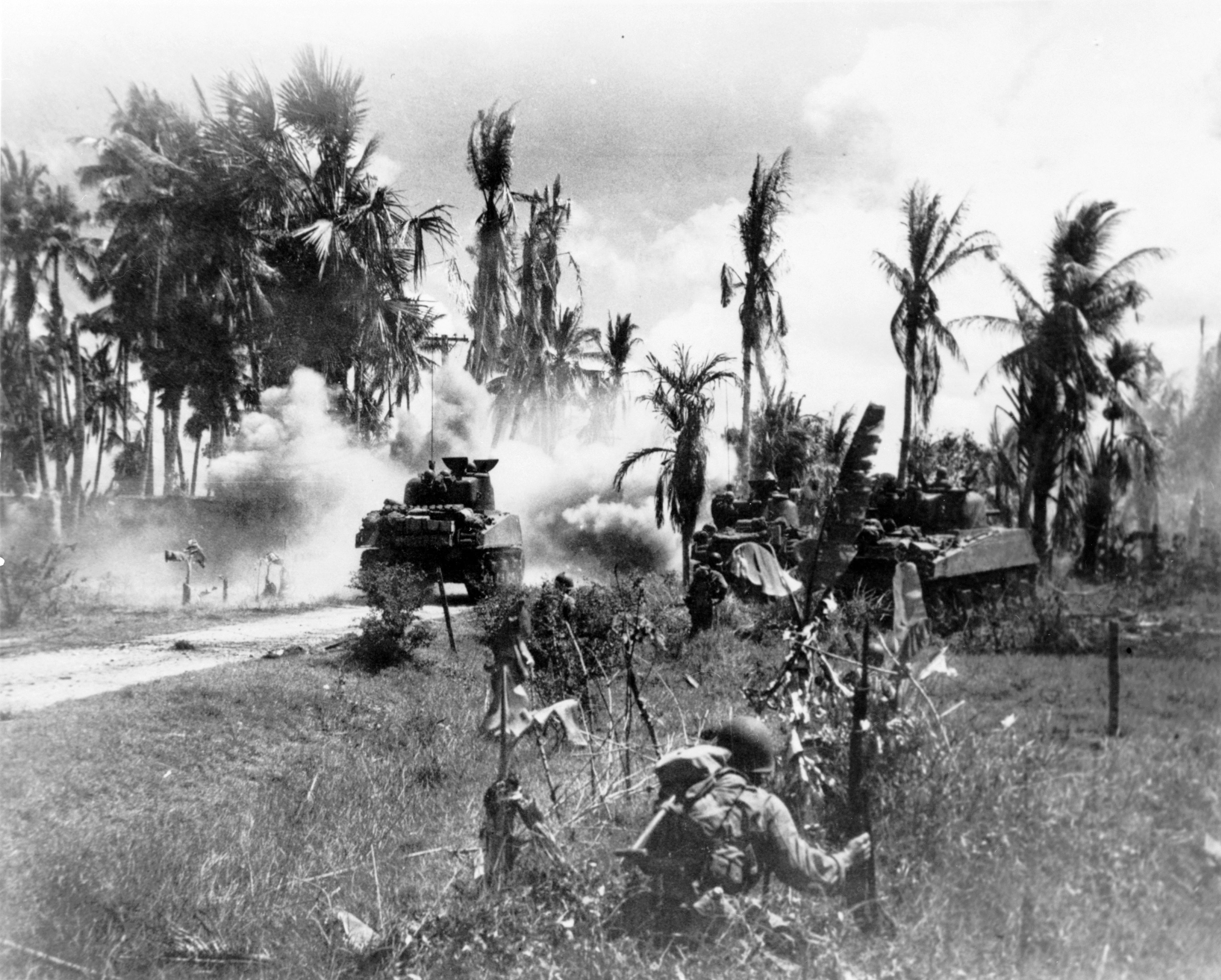
This is the last photo taken by Signal Corps photographer Lt. Robert Field.
His camera was recovered and the film developed.
https://www.findagrave.com/memorial/56779050/robert-edwin-field
ONE OF THE PHOTOS TAKEN BY T/5 HOWARD KLAWITTER BEFORE HE IS WOUNDED
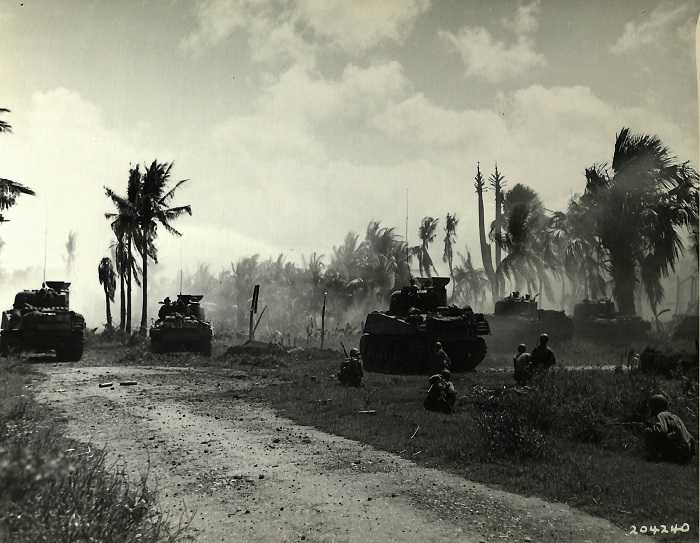
SC 204240
13. Troops of Co. A, 1st Battalion, 185th Infantry, 40th Division, take cover behind advancing tanks
while moving up on Jap positions on Panay Island, P.I.
Note: this is one of four photos made by Signal Corps photographer T/5 Howard Klawitter
before he was wounded. 3/19/45.
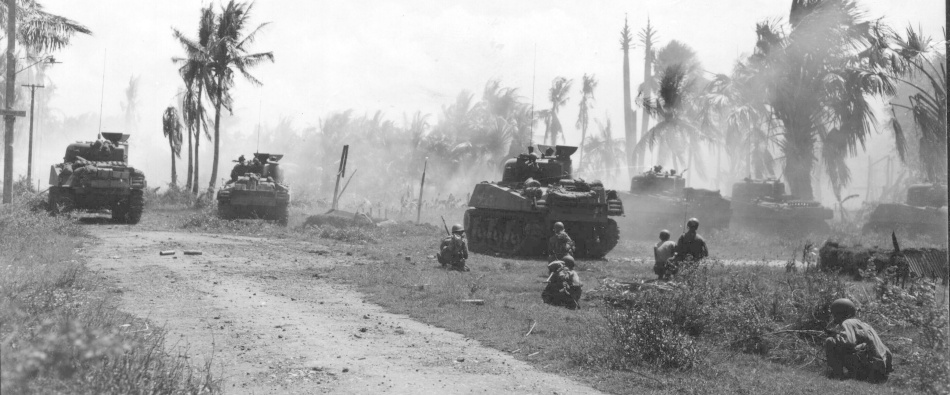
Troops of Co. A, 1st Battalion, 185th Infantry, 40th Division, take cover behind advancing tanks
while moving up on Jap positions on Panay Island, P.I.
Note: this is one of four photos made by Signal Corps photographer T/5 Howard Klawitter
before he was wounded. 3/19/45.
our tanks were summoned to the aid of the pinned-down foot troops and, using direct fire, destroyed many of the hostile positions. the japanese retreated to the rear of the catheral and then dispersed into adjacent buildings.
- U.S. Eight Army
Fortunately, by the time the reinforcements rushed to the scene, the enemy tanks had just withdrawn after rampaging around to their satisfaction. In this battle, First Lieutenant Sugahara fought against a tank at close quarters and was killed in action. A direct hit of the tank’s machine gun blasted off his upper body.
The Blood and Mud in the Philippines, Section 8.1
JAPANESE SUICIDE SQUADS ARE COMMITTED AGAINST THE TANKS
To stem the tank assaults several suicide squads were committed against the tanks. These sorties, however, were unsuccessful and it became necessary to place the Nakamura unit in the first line.
- Lt. Sadayoshi Ishikawa
Fortunately, by the time the reinforcements rushed to the scene, the enemy tanks had just withdrawn after rampaging around to their satisfaction. In this battle, First Lieutenant Sugahara fought against a tank at close quarters and was killed in action. A direct hit of the tank’s machine gun blasted off his upper body.
The Blood and Mud in the Philippines, Section 8.1
To stem the tank assaults several suicide squads were committed against the tanks. These sorties, however, were unsuccessful and it became necessary to place the Nakamura unit in the first line.
- Lt. Sadayoshi Ishikawa
To stem the tank assaults several suicide squads were committed against the tanks. These sorties, however, were unsuccessful and it became necessary to place the Nakamura unit in the first line.
- Lt. Sadayoshi Ishikawa
The eastward drive of the two battalions (1st Battalion and 2nd Battalion) of the (185th) regiment was halted when the 1st Battalion engaged approximately two enemy platoons barricaded in the Molo cathedral, receiving intense machine gun and rifle fire from this force. The Japanese position, which commanded all approaches, afforded excellent observation of our movement. Their guns were fired through slits in the cement walls surrounding the church and in the towers of the building. our tanks were summoned to the aid of the pinned-down foot troops and, using direct fire, destroyed many of the hostile positions. the japanese retreated to the rear of the catheral and then dispersed into adjacent buildings.
- U.S. Eight Army
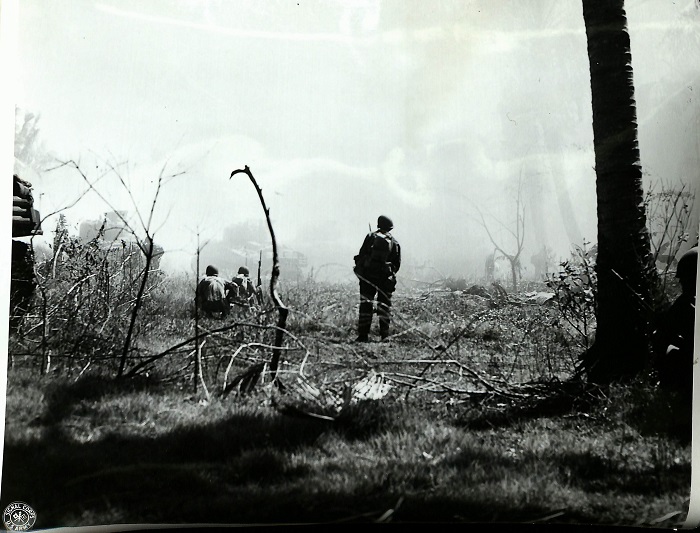
SC 263760
67. Tanks are moving up to remove Japs behind a stone wall in the city of Molo, Panay, P.I. 3/19/1945.
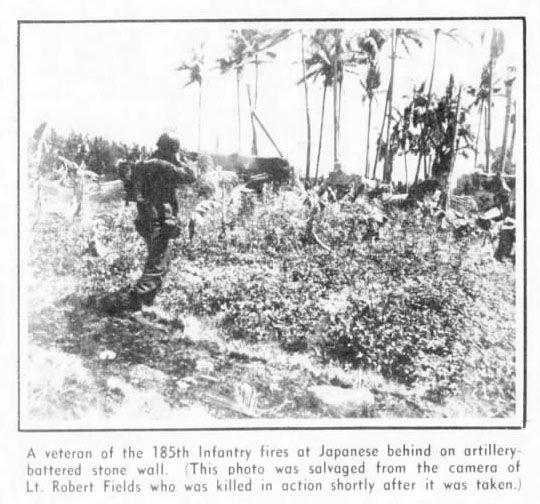
THIS MUST BE THE LAST PHOTO TAKEN BY LT. ROBERT E. FIELD
BEFORE HE IS KILLED BY THE COLLAPSING ARTILLERY-BATTERED STONE WALL IN THE PHOTO
https://www.findagrave.com/memorial/56779050/robert-edwin-field
MOVES AHEAD OF THE INFANTRY TO A STONE WALL BEHIND WHICH THE JAPANESE ARE BARRICADED
In October 1945, Lt. Robert E. Field was awarded the Silver Star, posthumously.
Silver Star Is Given as Award for Lieut. Field
Posthumous Award is made to Parents of Army Combat Photographer Killed in Panay Invasion.
Posthumous award of the Silver Star medal to the late First Lieutenant Robert E. Field, army combat photographer, has been made to his parents, Mr. and Mrs. A. M. Field, of 661 Clark Avenue. Lt. Field lost his life on March 19 during the Panay Island Invasion, and the presidential citation reads as follows:
“For gallantry in action against an armed enemy of the United States near * * *, on March 19, 1945. Lieutenant Field, a Signal Corps photographic officer, had volunteered to act as film courier for a photo combat assignment unit and while waiting to perform his mission, further volunteered to accompany combat troops and take photographs in action. Determined to obtain detailed pictures, he moved ahead of the infantry to a stone wall behind which the enemy was barricaded. Weakened by artillery fire the wall fell outward. Nearby infantrymen saw the wall falling and escaped, but Lieutenant Field, preoccupied with his camera, did not observe the danger. He was buried beneath the rubble, and died shortly after being evacuated. Through his outstanding gallantry at the cost of his life Lieutenant Field was able to obtain detailed combat photographs which proved of great value in subsequent studies of enemy tactics.”
Source: The News-Times (Webster Groves, Missouri), Thursday, 25 October 1945, page 1.
https://www.findagrave.com/memorial/56779050/robert-edwin-field
LT. ROBERT E. FIELD, SIGNAL CORPS COMBAT PHOTOGRAPHER
In October 1945, Lt. Robert E. Field was awarded the Silver Star, posthumously.
Silver Star Is Given as Award for Lieut. Field
Posthumous Award is made to Parents of Army Combat Photographer Killed in Panay Invasion.
Posthumous award of the Silver Star medal to the late First Lieutenant Robert E. Field, army combat photographer, has been made to his parents, Mr. and Mrs. A. M. Field, of 661 Clark Avenue. Lt. Field lost his life on March 19 during the Panay Island Invasion, and the presidential citation reads as follows:
“For gallantry in action against an armed enemy of the United States near * * *, on March 19, 1945. Lieutenant Field, a Signal Corps photographic officer, had volunteered to act as film courier for a photo combat assignment unit and while waiting to perform his mission, further volunteered to accompany combat troops and take photographs in action. Determined to obtain detailed pictures, he moved ahead of the infantry to a stone wall behind which the enemy was barricaded. Weakened by artillery fire the wall fell outward. Nearby infantrymen saw the wall falling and escaped, but Lieutenant Field, preoccupied with his camera, did not observe the danger. He was buried beneath the rubble, and died shortly after being evacuated. Through his outstanding gallantry at the cost of his life Lieutenant Field was able to obtain detailed combat photographs which proved of great value in subsequent studies of enemy tactics.”
Source: The News-Times (Webster Groves, Missouri), Thursday, 25 October 1945, page 1.
https://www.findagrave.com/memorial/56779050/robert-edwin-field
BUT LT. ROBERT E. FIELD, SIGNAL CORPS COMBAT PHOTOGRAPHER
PREOCCUPIED WITH HIS CAMERA, DOES NOT SEE THE DANGER
In October 1945, Lt. Robert E. Field was awarded the Silver Star, posthumously.
Silver Star Is Given as Award for Lieut. Field
Posthumous Award is made to Parents of Army Combat Photographer Killed in Panay Invasion.
Posthumous award of the Silver Star medal to the late First Lieutenant Robert E. Field, army combat photographer, has been made to his parents, Mr. and Mrs. A. M. Field, of 661 Clark Avenue. Lt. Field lost his life on March 19 during the Panay Island Invasion, and the presidential citation reads as follows:
“For gallantry in action against an armed enemy of the United States near * * *, on March 19, 1945. Lieutenant Field, a Signal Corps photographic officer, had volunteered to act as film courier for a photo combat assignment unit and while waiting to perform his mission, further volunteered to accompany combat troops and take photographs in action. Determined to obtain detailed pictures, he moved ahead of the infantry to a stone wall behind which the enemy was barricaded. Weakened by artillery fire the wall fell outward. Nearby infantrymen saw the wall falling and escaped, but Lieutenant Field, preoccupied with his camera, did not observe the danger. He was buried beneath the rubble, and died shortly after being evacuated. Through his outstanding gallantry at the cost of his life Lieutenant Field was able to obtain detailed combat photographs which proved of great value in subsequent studies of enemy tactics.”
Source: The News-Times (Webster Groves, Missouri), Thursday, 25 October 1945, page 1.
https://www.findagrave.com/memorial/56779050/robert-edwin-field
IS BURIED BENEATH THE RUBBLE AND DIES SHORTLY AFTER BEING EVACUATED
In October 1945, Lt. Robert E. Field was awarded the Silver Star, posthumously.
Silver Star Is Given as Award for Lieut. Field
Posthumous Award is made to Parents of Army Combat Photographer Killed in Panay Invasion.
Posthumous award of the Silver Star medal to the late First Lieutenant Robert E. Field, army combat photographer, has been made to his parents, Mr. and Mrs. A. M. Field, of 661 Clark Avenue. Lt. Field lost his life on March 19 during the Panay Island Invasion, and the presidential citation reads as follows:
“For gallantry in action against an armed enemy of the United States near * * *, on March 19, 1945. Lieutenant Field, a Signal Corps photographic officer, had volunteered to act as film courier for a photo combat assignment unit and while waiting to perform his mission, further volunteered to accompany combat troops and take photographs in action. Determined to obtain detailed pictures, he moved ahead of the infantry to a stone wall behind which the enemy was barricaded. Weakened by artillery fire the wall fell outward. Nearby infantrymen saw the wall falling and escaped, but Lieutenant Field, preoccupied with his camera, did not observe the danger. He was buried beneath the rubble, and died shortly after being evacuated. Through his outstanding gallantry at the cost of his life Lieutenant Field was able to obtain detailed combat photographs which proved of great value in subsequent studies of enemy tactics.”
Source: The News-Times (Webster Groves, Missouri), Thursday, 25 October 1945, page 1.
https://www.findagrave.com/memorial/56779050/robert-edwin-field
https://www.findagrave.com/memorial/56779050/robert-edwin-field
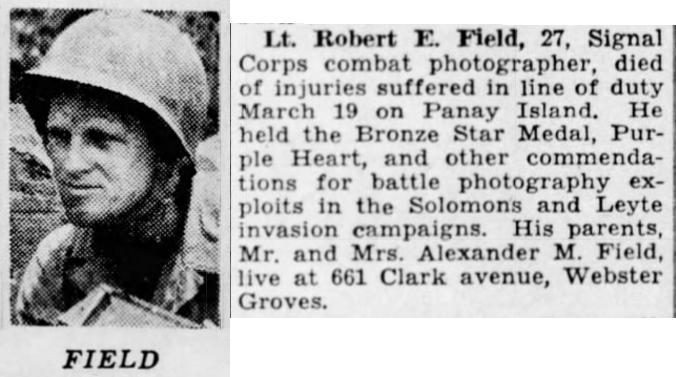
https://www.findagrave.com/memorial/56779050/robert-edwin-field
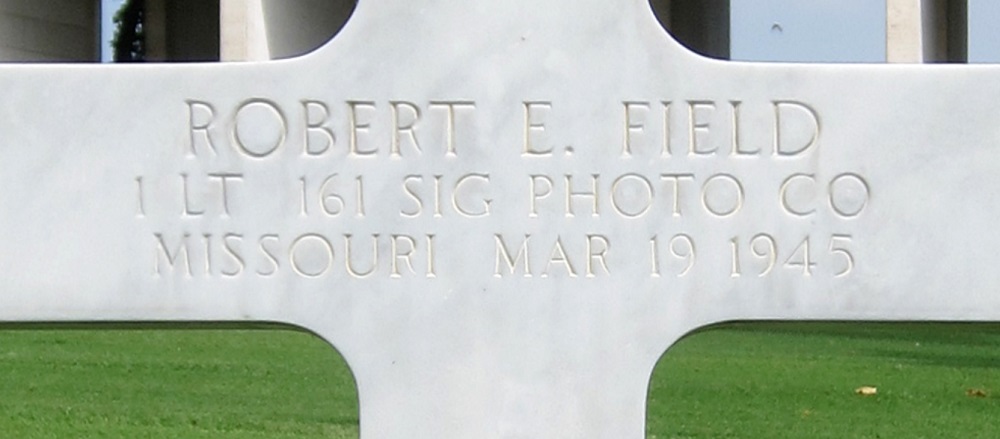
https://www.findagrave.com/memorial/56779050/robert-edwin-field
LT. ROBERT E. FIELD, SIGNAL CORPS COMBAT PHOTOGRAPHER
PROVE OF GREAT VALUE IN SUBSEQUENT STUDIES OF ENEMY TACTICS
In October 1945, Lt. Robert E. Field was awarded the Silver Star, posthumously.
Silver Star Is Given as Award for Lieut. Field
Posthumous Award is made to Parents of Army Combat Photographer Killed in Panay Invasion.
Posthumous award of the Silver Star medal to the late First Lieutenant Robert E. Field, army combat photographer, has been made to his parents, Mr. and Mrs. A. M. Field, of 661 Clark Avenue. Lt. Field lost his life on March 19 during the Panay Island Invasion, and the presidential citation reads as follows:
“For gallantry in action against an armed enemy of the United States near * * *, on March 19, 1945. Lieutenant Field, a Signal Corps photographic officer, had volunteered to act as film courier for a photo combat assignment unit and while waiting to perform his mission, further volunteered to accompany combat troops and take photographs in action. Determined to obtain detailed pictures, he moved ahead of the infantry to a stone wall behind which the enemy was barricaded. Weakened by artillery fire the wall fell outward. Nearby infantrymen saw the wall falling and escaped, but Lieutenant Field, preoccupied with his camera, did not observe the danger. He was buried beneath the rubble, and died shortly after being evacuated. Through his outstanding gallantry at the cost of his life Lieutenant Field was able to obtain detailed combat photographs which proved of great value in subsequent studies of enemy tactics.”
Source: The News-Times (Webster Groves, Missouri), Thursday, 25 October 1945, page 1.
https://www.findagrave.com/memorial/56779050/robert-edwin-field
EARNS SILVER STAR (POSTHUMOUS)
In October 1945, Lt. Robert E. Field was awarded the Silver Star, posthumously.
Silver Star Is Given as Award for Lieut. Field
Posthumous Award is made to Parents of Army Combat Photographer Killed in Panay Invasion.
Posthumous award of the Silver Star medal to the late First Lieutenant Robert E. Field, army combat photographer, has been made to his parents, Mr. and Mrs. A. M. Field, of 661 Clark Avenue. Lt. Field lost his life on March 19 during the Panay Island Invasion, and the presidential citation reads as follows:
“For gallantry in action against an armed enemy of the United States near * * *, on March 19, 1945. Lieutenant Field, a Signal Corps photographic officer, had volunteered to act as film courier for a photo combat assignment unit and while waiting to perform his mission, further volunteered to accompany combat troops and take photographs in action. Determined to obtain detailed pictures, he moved ahead of the infantry to a stone wall behind which the enemy was barricaded. Weakened by artillery fire the wall fell outward. Nearby infantrymen saw the wall falling and escaped, but Lieutenant Field, preoccupied with his camera, did not observe the danger. He was buried beneath the rubble, and died shortly after being evacuated. Through his outstanding gallantry at the cost of his life Lieutenant Field was able to obtain detailed combat photographs which proved of great value in subsequent studies of enemy tactics.”
Source: The News-Times (Webster Groves, Missouri), Thursday, 25 October 1945, page 1.
https://www.findagrave.com/memorial/56779050/robert-edwin-field
Around 2 p.m., we suddenly heard guns in the direction of Molo – a dozen shots that moved from point to point, which made me wonder if the guerrillas had finally started using self-propelled guns. Running and stumbling like a rolling ball, an orderly from the Fujii unit soon arrived to report, ‘The enemy tanks are attacking the Molo position.’ The second orderly followed with the report, ‘A dozen enemy tanks are approaching and fiercely attacking from the direction of Molo. There are three or four tanks at the Molo Bridge. The landmines all ended up misfiring. Hurry up and send reinforcements!’ Damn, all my reliable landmines had misfired. I stomped my feet in frustration. Now there was no doubt about the landing of the US forces. First Lieutenant Ishikawa immediately sent the Machine-Gun Force and NCO Cadet Platoon to reinforce the Molo position.
The Blood and Mud in the Philippines, Section 8.1
The Japanese Army in Panay had its final operations meeting at the headquarters’ air raid shelter at the Commander’s new quarters near the Iloilo City Hall in Molo. Previously the swimming pool at the garden of the Locsin family residence, the shelter was still in existence in 1973.
The Blood and Mud in the Philippines, Section 8.2
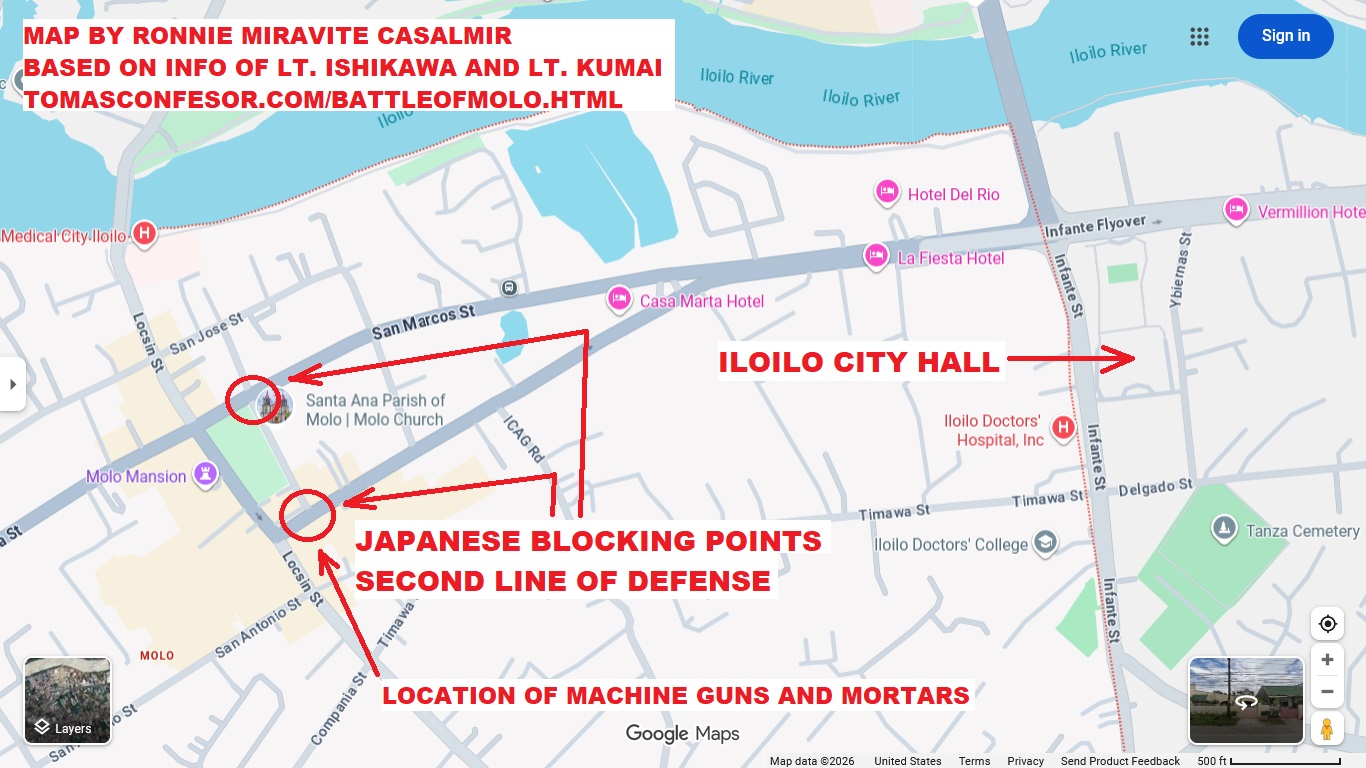
Japanese Molo Positions and Iloilo City Hall
THAT AMERICAN TANKS ARE ATTACKING MOLO
Around 2 p.m., we suddenly heard guns in the direction of Molo – a dozen shots that moved from point to point, which made me wonder if the guerrillas had finally started using self-propelled guns. Running and stumbling like a rolling ball, an orderly from the Fujii unit soon arrived to report, ‘The enemy tanks are attacking the Molo position.’ The second orderly followed with the report, ‘A dozen enemy tanks are approaching and fiercely attacking from the direction of Molo. There are three or four tanks at the Molo Bridge. The landmines all ended up misfiring. Hurry up and send reinforcements!’ Damn, all my reliable landmines had misfired. I stomped my feet in frustration. Now there was no doubt about the landing of the US forces. First Lieutenant Ishikawa immediately sent the Machine-Gun Force and NCO Cadet Platoon to reinforce the Molo position.
The Blood and Mud in the Philippines, Section 8.1
THE REINFORCEMENTS ARRIVE AT MOLO AND TAKE A STRONG POSITION NEAR THE CHURCH
Around 2 p.m., we suddenly heard guns in the direction of Molo – a dozen shots that moved from point to point, which made me wonder if the guerrillas had finally started using self-propelled guns. Running and stumbling like a rolling ball, an orderly from the Fujii unit soon arrived to report, ‘The enemy tanks are attacking the Molo position.’ The second orderly followed with the report, ‘A dozen enemy tanks are approaching and fiercely attacking from the direction of Molo. There are three or four tanks at the Molo Bridge. The landmines all ended up misfiring. Hurry up and send reinforcements!’ Damn, all my reliable landmines had misfired. I stomped my feet in frustration. Now there was no doubt about the landing of the US forces. First Lieutenant Ishikawa immediately sent the Machine-Gun Force and NCO Cadet Platoon to reinforce the Molo position.
The Blood and Mud in the Philippines, Section 8.1
At this time the company was reinforced by an excellently trained unit, equipped with machine guns and mortars.
- Lt. Sadayoshi Ishikawa
Location of the Machine Guns and Mortars
Fortunately, by the time the reinforcements rushed to the scene, the enemy tanks had just withdrawn after rampaging around to their satisfaction. In this battle, First Lieutenant Sugahara fought against a tank at close quarters and was killed in action. A direct hit of the tank’s machine gun blasted off his upper body.
The Blood and Mud in the Philippines, Section 8.1
Q. Did you suffer many losses in this first engagement?
A. About 30 men were killed
- Lt. Sadayoshi Ishikawa
APPARENTLY MAKES THE JAPANESE REALIZE
THAT THEY ARE ABOUT TO BE SURROUNDED
AND CUT OFF FROM THEIR ESCAPE ROUTE TO THE MOUNTAINS
A DECISION IS MADE TO BREAK THROUGH THE GUERRILLA LINES AT JARO
AND WITHDRAW TO THE MOUNTAINS WHILE THEY STILL CAN
At 1300, on the 19th, a strong assault force supported by tanks, attacked Jaro. On consideration it was decided to break through the guerrilla lines at Jaro in a night withdrawal which was to be made toward the mountains lying to the west. All of the subordinate unit commanders were therefore assembled and given an order of withdrawal.
- Lt. Sadayoshi Ishikawa
The Japanese Army in Panay had its final operations meeting at the headquarters’ air raid shelter at the Commander’s new quarters near the Iloilo City Hall in Molo. Previously the swimming pool at the garden of the Locsin family residence, the shelter was still in existence in 1973.
The Blood and Mud in the Philippines, Section 8.2
Colonel Tozuka ordered the abandonment of Iloilo City and the move towards Bocari. I then explained the plan. The plan of the operation was to break through enemy positions at Jaro by force.
The Blood and Mud in the Philippines, Section 8.2
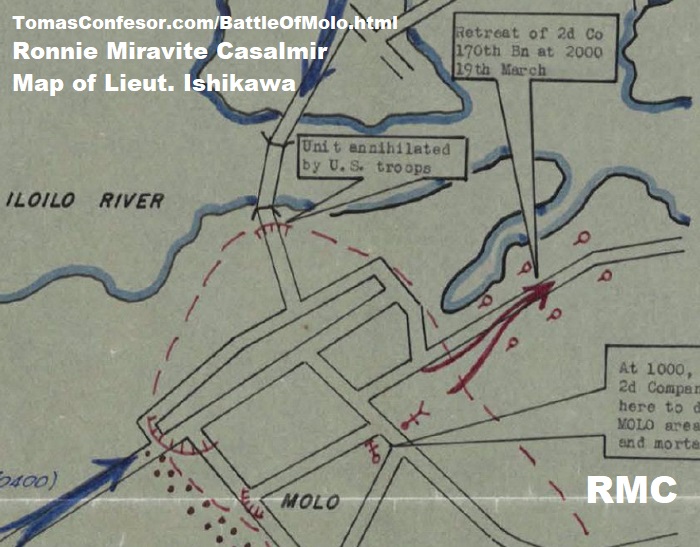
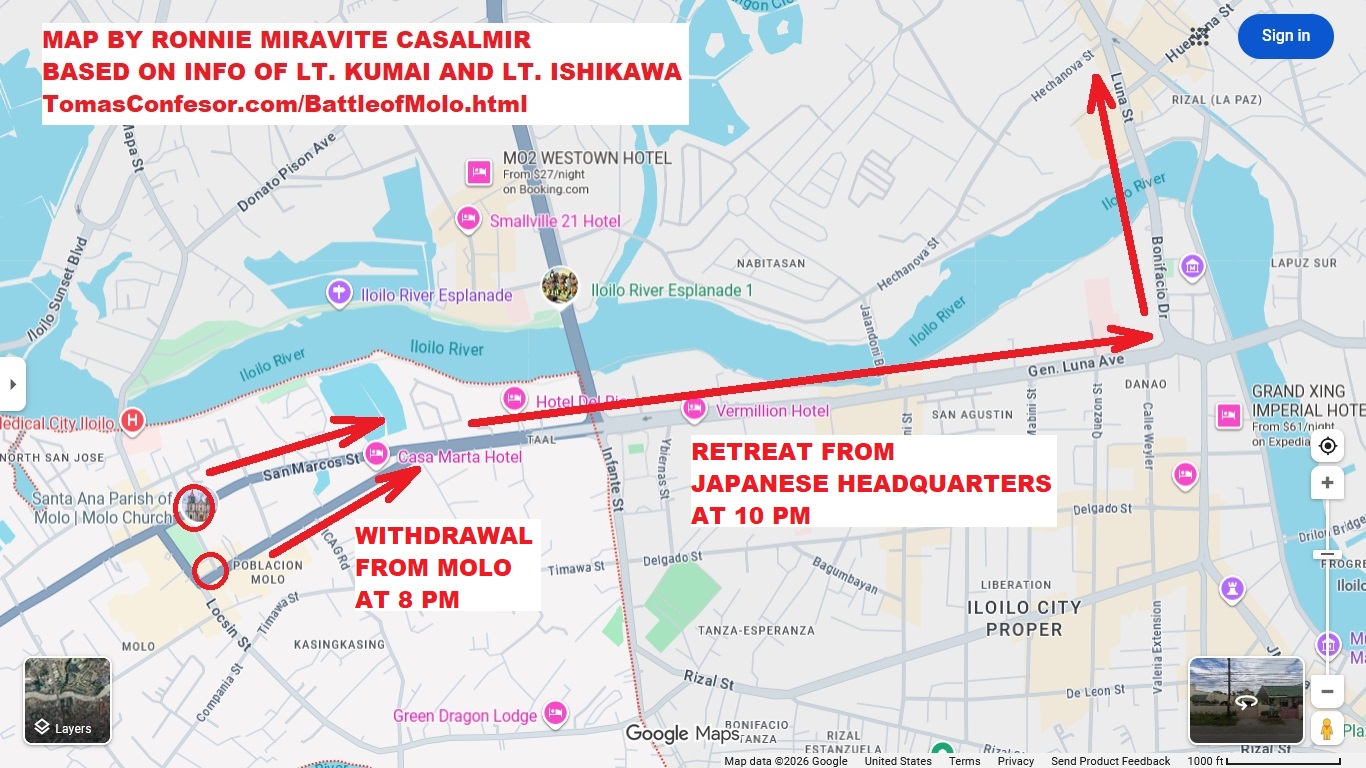
Japanese Retreat
The retreat began at 2200.
- Lt. Sadayoshi Ishikawa
Q. Where were the Americans at this time? (the time the japanese retreated from iloilo)
A. We were engaging the Americans in the vicinity of Molo, about 2 kilometers from Iloilo
- Lt. Sadayoshi Ishikawa
Soon, explosions of heavy shells fired by the enemy forces positioned at Arevalo started to fall into the city. Soldiers attached to the headquarters burned confidential papers and set fire to the staff car.
In the light of the flames, soldiers assembled on the main road in front of the unit commander’s quarters and, set out on a silent march.
As we passed the San Pablo hospital, Hôjin women called out to us one after another, sadly pleading, ‘Help us, please, soldiers, we depend on you.’ I felt sympathy for the Hôjin and heavy-hearted about the future.
Passing by the Provincial Capitol, my joyful memories of the past in Iloilo City rushed through my mind. Further ahead, the Lopez residence stood surrounded by trees, reminding me of the happy days when I was invited there.
I yelled on loudly, ‘Do not set this on fire!’ as we continued to advance, past the Iloilo High School building where our former headquarters had been, and the home of the Cacho head of the PECO that used to be the commander’s residence.
The Iloilo Normal School and the Army Hospital were on fire. The Hospital must have been set on fire after the patients who could not move had killed themselves. I felt very sorry for them.
However, after we passed Jaro plaza, all the emotions disappeared. The coconut groves stood silently in the dark.
The time had come for the final battle.
The Blood and Mud in the Philippines, Section 8.2
Japanese Retreat
AMERICAN TANKS AND INFANTRY OVERRAN THE JAPANESE SECOND LINE OF DEFENSE
THE FOLLOWING DAY
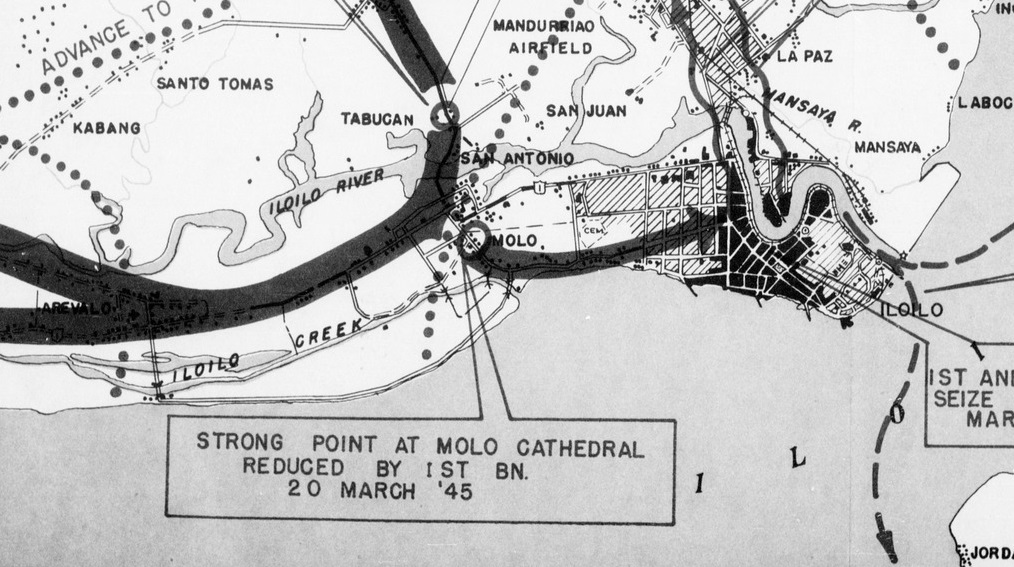
Map provided by Wanda Ole
G.O. No. 60, Hq 40th Inf Div, APO 40, 19 April 1945
AWARDS OF THE BRONZE STAR MEDAL:
By direction of the President, under the provisions of Executive Order No. 9419, 4 February 1944 (Sec II, Bulletin 3, WD, 1944) a Bronze Star Medal is awarded by the Commanding General, 40th Infantry Division, to the following named officer and enlisted man:
Captain JOHN C. HUNTINGTON, 0101608, Tank Corps, United States Army. For heroic achievement in connection with military operations against the enemy on Panay and Negros, P.I., from 18 March to 1 April 1945. Captain Huntington made a personal foot reconnaissance of an area prior to committing his tanks during which time he was exposed to enemy machine gun and mortar fire. He moved in front of his vehicles during the first fight designating targets for the tanks. On another occasion when his communications failed, he went forward on foot, and directed the tank attack while the vehicles were "buttoned down". During a later engagement when the radios again ceased to operate properly, Captain Huntington directed his tanks from a 1/4 ton truck. Although his truck was hit by enemy fire while he was standing beside it, he continued his coordination on foot of the tank-infantry fighting. During all these engagements, Captain Huntington, with utter disregard for his personal safety, continually reconnoitered the ground and frequently exposed himself to enemy fire. Home address: Mrs. John C. Huntington (wife), 1549 Jorquil Terrace, Chicago, Illinois.
91
BY COMMAND OF MAJOR GENERAL BRUSH:
GEORGE W. LATIMER,
Colonel, GSC,
Chief of Staff.

SC
69.
